Ford Model T – Wheels and Tires
All Ts built between 1908 and 1925 came from the factory with painted wooden spoked wheels. Between 1909 and 1912, the wheel colors matched the body colors. After the moving assembly line was introduced in 1913, production grew exponentially and as all Ts were black, the wheels matched. This would stay true until 1926, when new wheel options became available. If you chose wooden spokes, if painted, they were black. Unpainted or natural look varnished wheels were an option. (Many current owners of earlier era Ts prefer the ‘natural’ appearance of varnished spokes but only painted black is factory correct.) The big change for 1926 was that wire wheels became a factory option. The standard color for wire wheels from the factory was black but dealer color options were available, plus you could always get them repainted. Wheels were one of the most common after-market options during the T era, just as they are today.
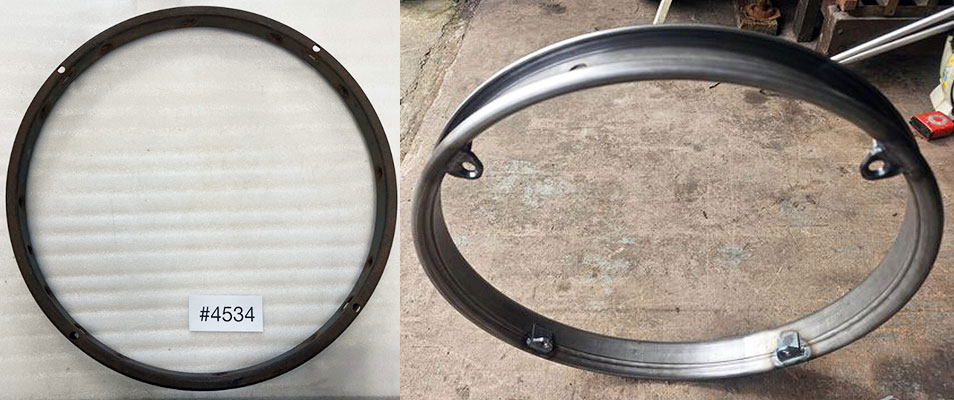
Ford Model T Early and Demountable Rims
First Generation Wheels
T tires from 1908 – 1925 were 30 inches in diameter. Initially the front tires were 3 inches wide and the rear tires were 3.5, but nowadays most people use 3.5 all around. These are all high pressure – 55-60 psi (pounds per square inch.) They require inner tubes and flaps to protect the tube from the rough inner surfaces of the rims. They are clincher tires, held on a lip around the steel rim that is a separate piece from the wooden wheel. Up to 1919, you had to remove the wheel to replace the tire, and getting the tires on and off is hard work.
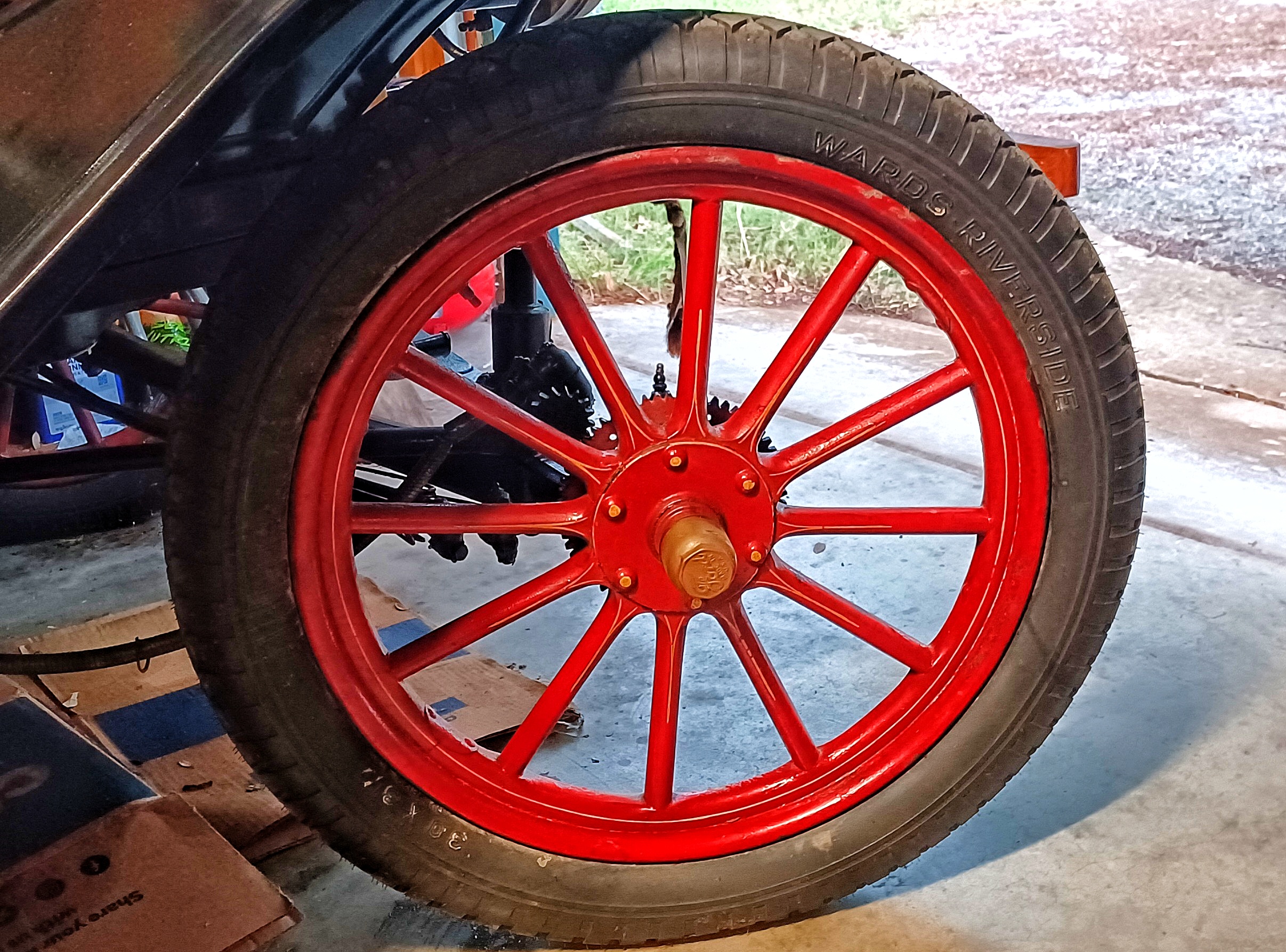
Ford Model T early wheel
Split Rims
In 1919, demountable rims were introduced, making roadside tire changes much easier. Four nuts held the rim in place and you simply took your already rim-mounted spare and swapped it out. However, removing the tire from the rim and putting it back on back at base was still a lot of hard work.
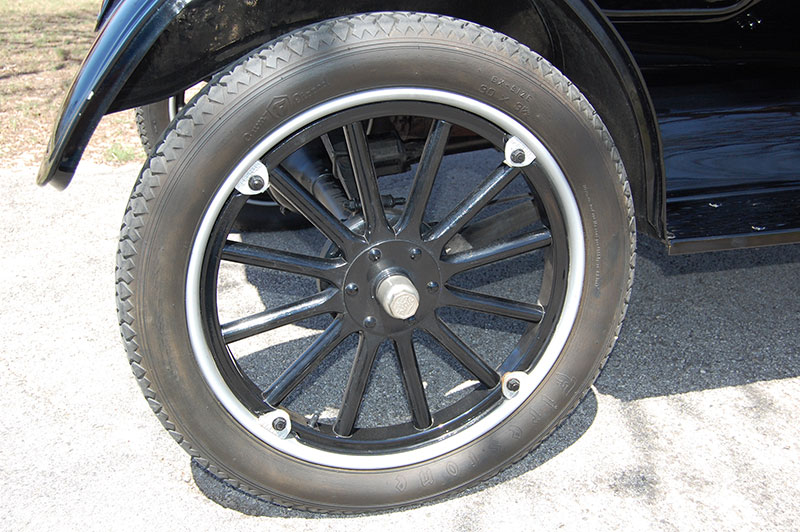
Ford Model T wheel with a demountable rim
New Tires for the “New Ford.”
Among the package of “New Ford” improvements for model year 1926, balloon tires installed at the factory became available. They significantly improved ride and handling. The tires had the same circumference but had larger side walls and lower air pressure. As a result they absorbed road imperfections much better and were more comfortable for occupants. They were given the name “balloon tires. ” They were made possible because of improvements in tire technology – better rubber compounds and construction methods. The tires still required inner tubes and flaps.
Another changer for model year 1926 was factory issue split rims. This was an attempt to make tire changing easier. The rims had tabs that could be disconnected, reducing the diameter of the rim. Because of their size and the relatively low pressure, many of the dangers associated with large split rims fitted to heavy duty trucks are not a factor but changing a tire on a split rim T still requires a lot of care and attention.
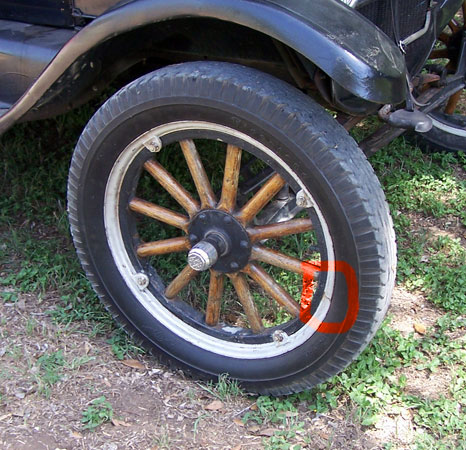
Ford Model T wheel with a split rim
The new tires had two new wheel options. You could still get old-fashioned wooden spoked wheels, but they had shorter spokes. This was to accommodate the new tires with larger side walls. Or you could get brand new steel-spoked wire wheels. These had the same diameter as the wooden spoked wheels and used the same 21 inch tires.

Ford Model T with wire spoke wheels
Carrying Spare Tires
Until the model year 1917 and its associated changes to the body of the Ford Model T, spare tires were mainly carried on the running board, often where the driver’s door would be. This was not a problem as most Ts – at least in the USA – did not have a door for the driver. It also made carrying several spares – something of a necessity in those years of bad roads and weak tires – a lot easier. In 1917, the factory added a tire carrier on the rear of the vehicle.

Ford Model Ts carrying spare tires – old and new style