Ford Model T – Chassis, Axles, Suspension, and Steering
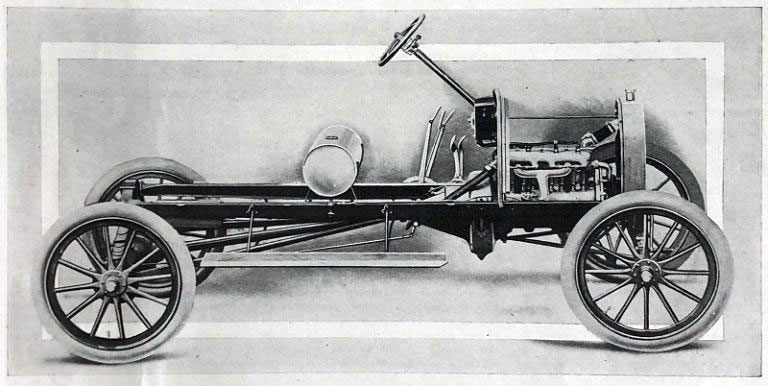
The Ford Model T chassis or frame was a marvel of simplicity. It was an open flat rectangle, made of vanadium steel. It was lightweight, flexible, and strong. Like the rest of the car, there were evolutionary changes over time. Various attachment brackets were relocated or added as the firewall changed over the years, and electric components were added. The most significant change to the frame came in 1926 to accommodate the lower and wider body, but you have to be something of a T expert to tell the difference from previous years.

Ford Model T chassis or frame
Axles
The T has beam axles, front and rear. While they changed over the years, they stayed remarkably similar. The front axle is a solid piece of forged vanadium steel alloy. The wheels attach at each end. The rear axle has the differential in the middle, with rotating shafts inside sealed tubes going to the wheels.
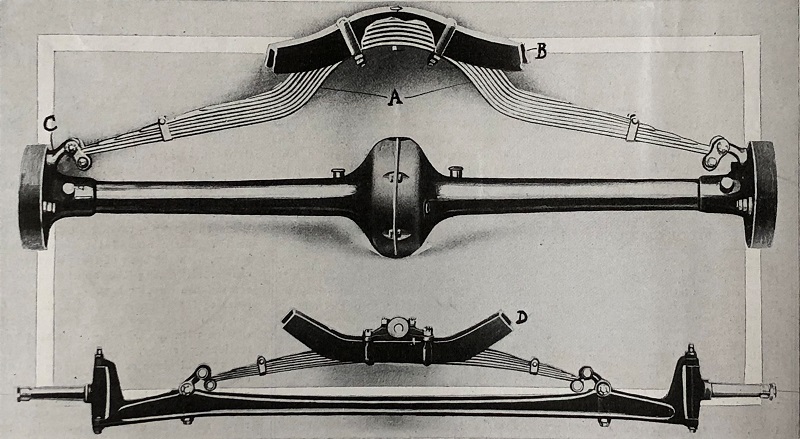
Ford Model T chassis and axles
Suspension
Both are attached to the frame by multi-leaf transverse springs. This simple arrangement, combined with the flexible frame, allowed for maximum up and down movement. This was a huge asset on unpaved, often rutted, roads.
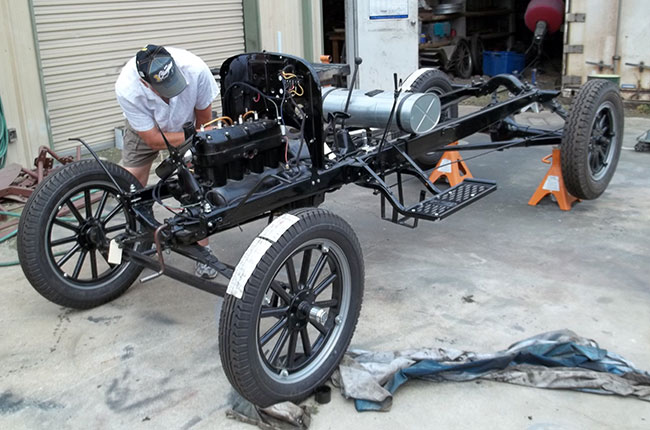
Ford Model T chassis, axles, and suspension leaf springs
Shock absorbers
Ford Model Ts did not come from the factory with shock absorbers. Devices to improve ride and handling were very plentiful from parts houses and catalogs. These were the most popular upgrades during the T era. Coiled spring types made by Hassler were very popular. They are most commonly fitted on the front only but can also be fitted at the rear as well. Sets often come up for sale at swap meets and on auction sites like eBay. Several of the major T suppliers also sell shock absorbers for Ts. Be careful that they are not the type only suitable for T buckets, high-powered race cars with modern frames and mechanicals, designed to look a bit like original Ts but have few, if any, original T parts. The tubs resemble a Model T but are often made of fiberglass or plastic.
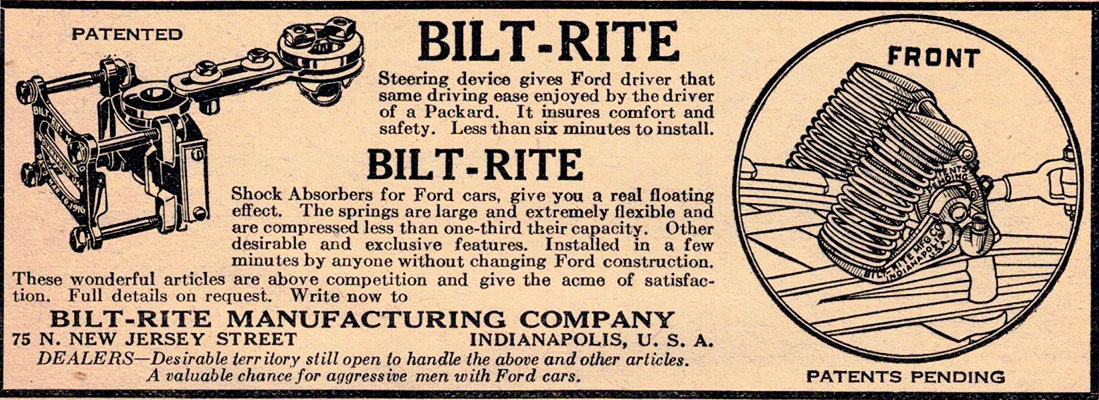
Advert for devices to improve Ford Model T steering and suspension
Steering
As you can see in the diagram, the steering system on the Ford Model T is incredibly basic. It works well enough at the speed most Ts can achieve. It was designed for unpaved, often muddy, roads and the resulting up and down axle movements. At faster speeds – 45 mph + – the system is frankly a liability. Ts being rebuilt for speed need a better, stronger steering system to absorb all the forces at play. They also need upgraded brakes, but that’s a whole nuther story.

Ford Model T steering diagram
Frame Lubrication
Unlike modern cars, the chassis, axles and steering assembly on a T need to be lubricated on a regular schedule. The attached chart from the Ford Model T owner’s manual shows the locations and frequency. Regular engine oil is OK in many areas. Heavy grease is needed within what are called cups. Once filled, these should be turned at the schedule suggested to press the grease into the fittings.
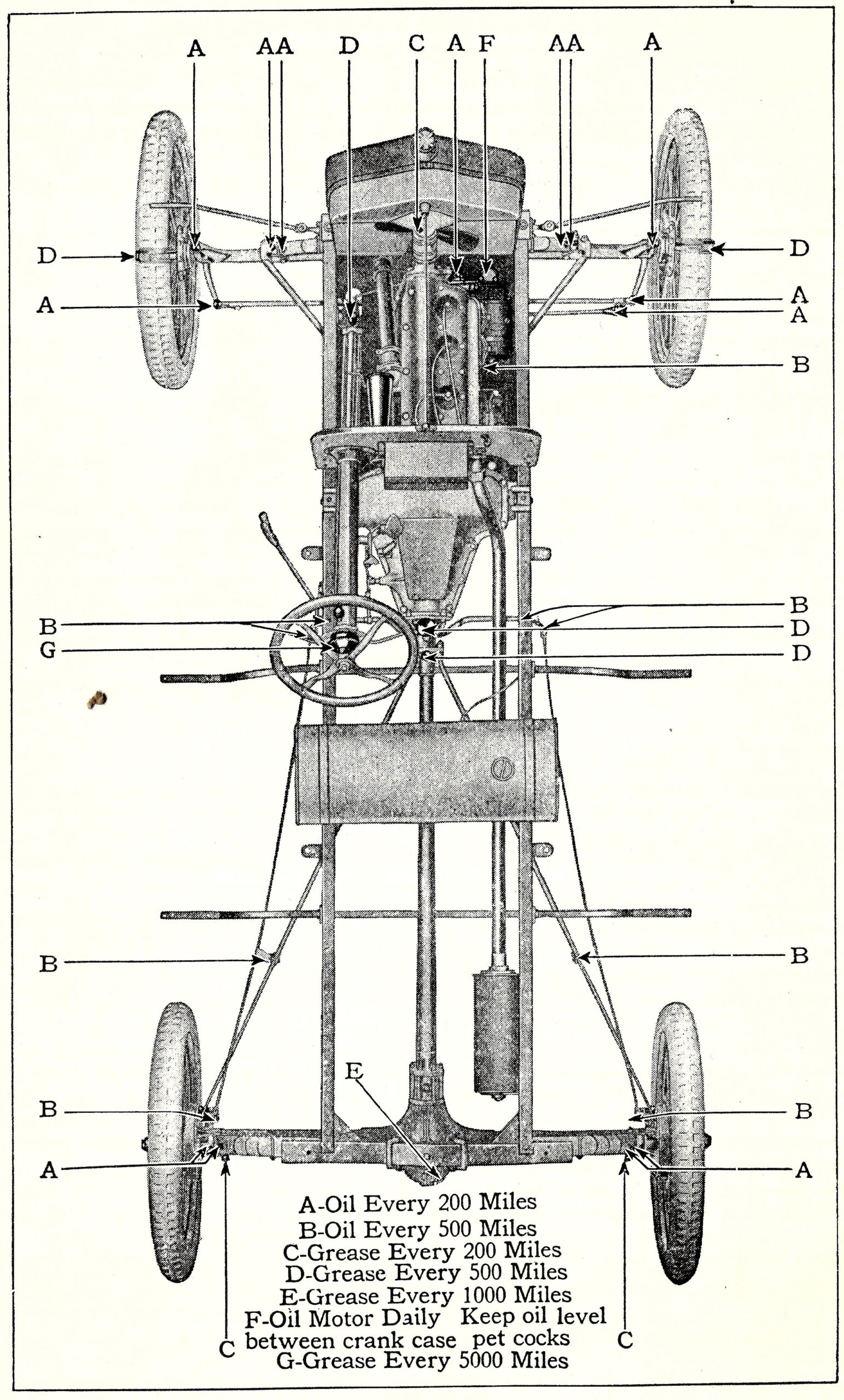
Ford Model T frame lubrication chart