Ford Model T – Radiator and Coolant
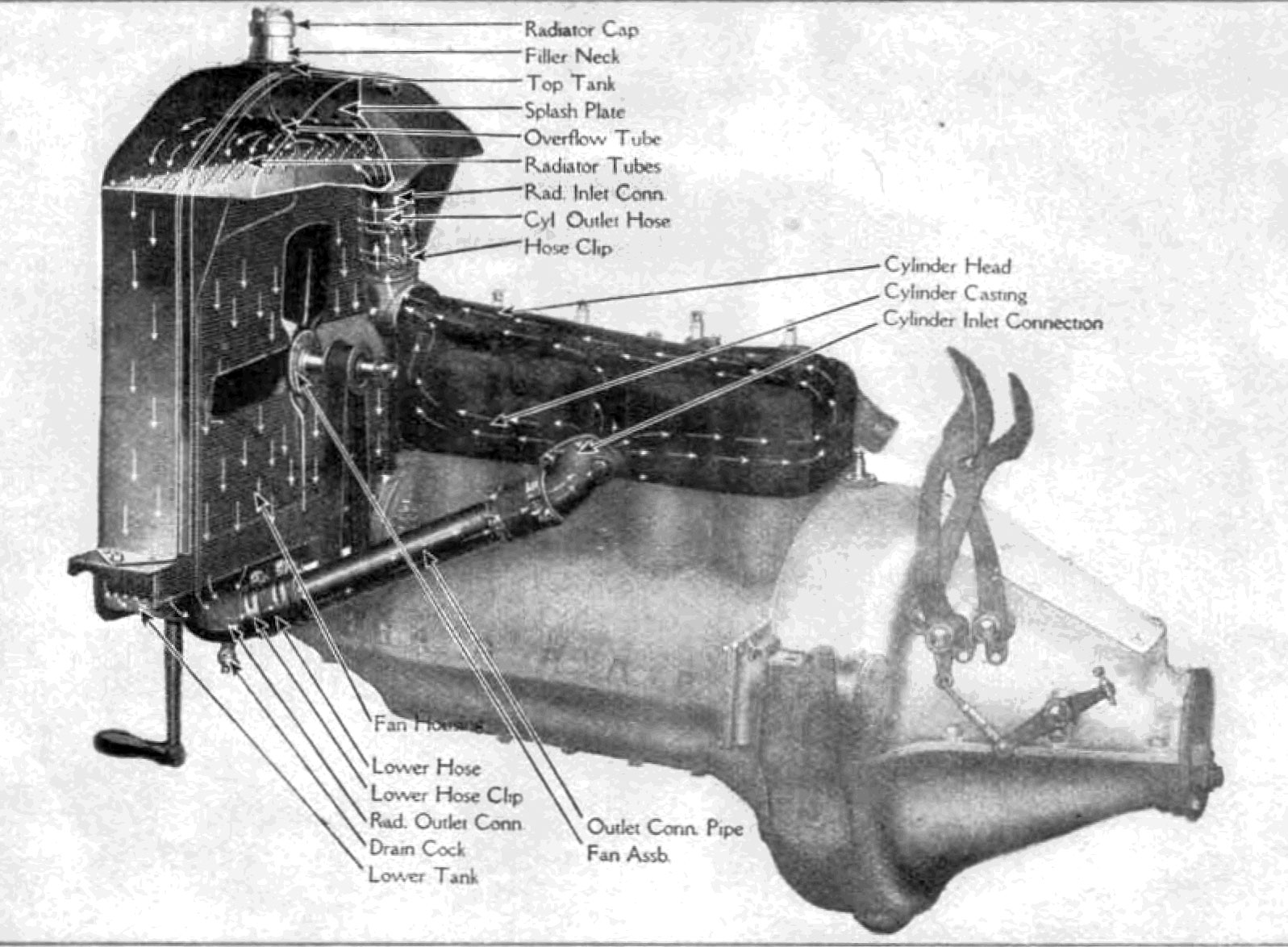
The appearance of the radiator and later its cover were a defining element of how the T’s style, if that word can be said to apply to Ts. Each brand made a point of having a distinctive style, and the radiator is one of the best ways to tell vehicles apart, although most now are hidden behind a decorative/defensive grille. The T radiator is formed with a tank at the top, and cooling tubes passing down through thin metal fins carefully designed to cool the fluid down as it sinks to the bottom tank.

Ford Model T radiator styles
The T radiator had two main eras. Until 1917, the T radiator was made of brass, and the tanks were out in the open, with decorative brass sides to hide the innards. There were subtle changes over these years but by and large it remained the same. In 1917 a new radiator was introduced that sat within a steel shell which redefined the vehicle’s appearance. For the 1924 model year, introduced in the fall of 1923, the height of the radiator core was increased from 17 inches to 18 3/8 inches. To this day these are referred to as low and high radiators. The difference is so subtle, the best way to tell the difference is the small apron added at the bottom of the “high-style” cars. In 1926, to complement other changes and the addition of colors other than black, the radiator cover was coated was nickel plated. (This was also applied to the headlight surrounds.)
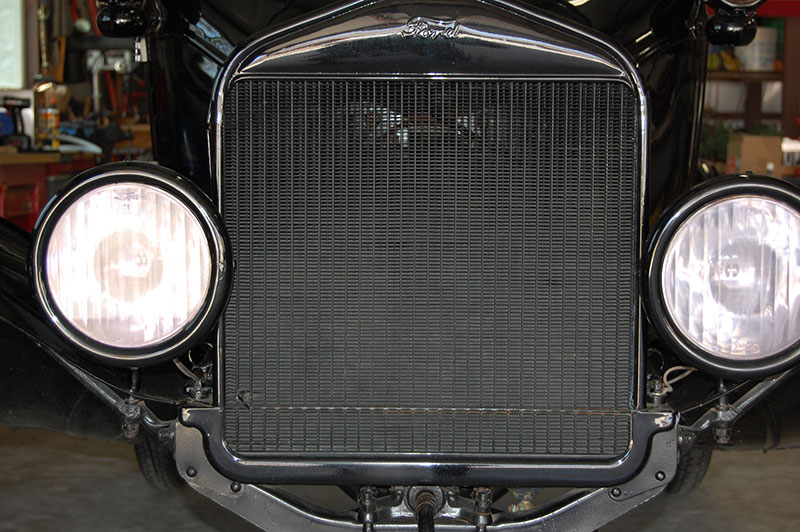
Ford Model T with low radiator
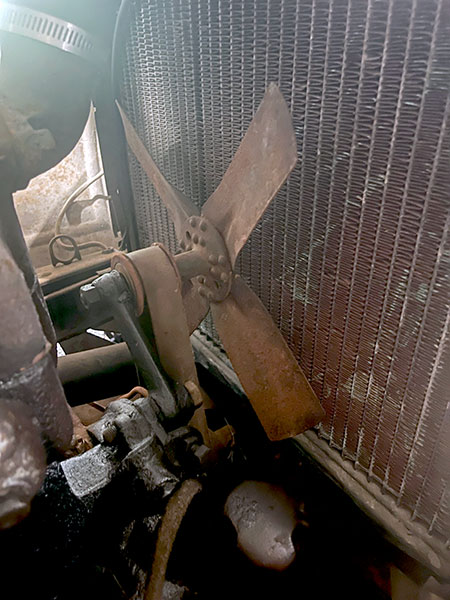
A well-functioning radiator is essential to maintaining the life of your engine. And a bad radiator is the best way to damage it. Any clogged passages in the radiator will badly reduce its effectiveness. Damaged fins or fins that have separated from the coolant tubes will also dramatically reduce efficiency. Many local radiator shops can repair existing radiators or, if it is just too far gone, there are a couple of companies that sell reproduction radiators. Owners who want to campaign their Ts in fine point judging events may opt for a strictly original T radiator but most people opt for modern cores with more rods that are better able to dissipate heat.
Ford Model T radiator fan
Coolant
Any 50/50 mix will be just fine – whatever is available at the supermarket or parts store. In special circumstances, especially parades (Ts are not very good in parades – they need to be moving forward at a minimum of 10 mph for the air to effectively cool the coolant as it passes through the radiator) you can use distilled water temporarily, as it dissipates heat a little better. But distilled water is corrosive, so the addition of a “Water-Wetter” additive to help prevent internal is advisable. Never use straight tap water. It is full of contaminants, especially lime. It’s called hard water for a reason. It will clog up the small tubes inside your radiator very quickly. If push comes to shove, and you have no choice, and you have to use tap water, be sure to flush the system as soon as possible using a flush product easily available at parts stores. If you use distilled water, you should add straight (undiluted) antifreeze as soon as possible.
Ford Model T engine cooling system
Coolant Level
You should only fill your radiator to the point where the fins are covered, which you can observe when you remove the cap and look inside. This usually corresponds to just under the Ford script embossed on either an early brass radiator or the radiator cover starting in the all-black era. If you overfill, the system will find its own level, either with the overflow tube or bubbling around the radiator cap. New T owners mistake this for a problem and think they have to add more coolant. The T’s coolant system is not pressurized or sealed. Because the thermos-syphon system works optimally either at or just under boiling point, it will lose fluid through evaporation as the miles go by. Owners should regularly check the level and top up as required. Experienced owners carry 50/50 coolant with them for this reason.
The Ford Model T did not come from the factory with an engine temperature gauge. One of the most popular after-market items available was a motometer which easily replaces the factory radiator cap. Its functionality could be added to with additional pieces such as wings or the “dog bone.” Of course, all kinds of fancy radiator caps were available to dress up your plain old T, but none had the practical value of a motometer.
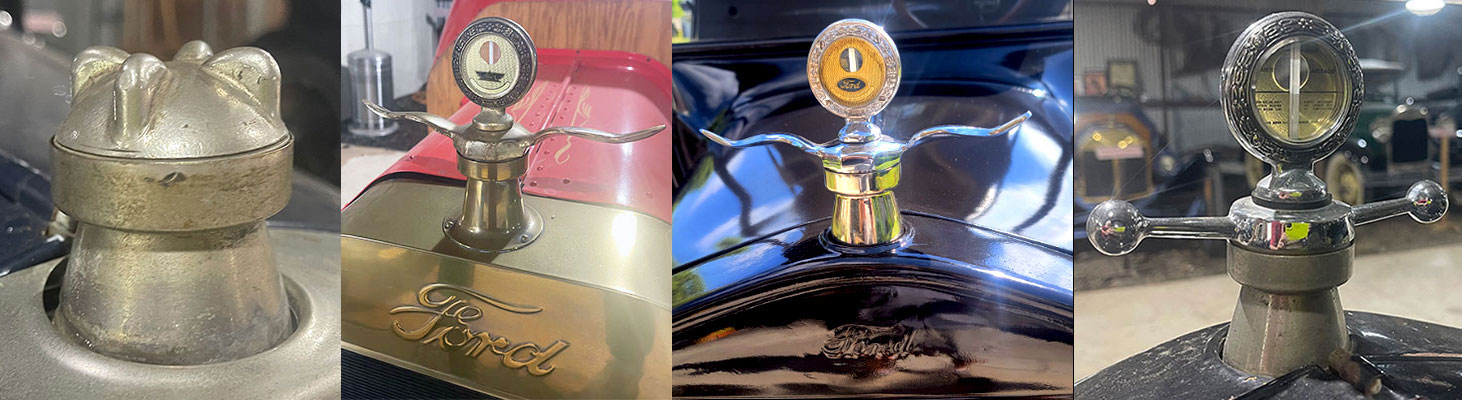
Ford Model T radiator caps. The factory style plus others with motometers
Water pumps
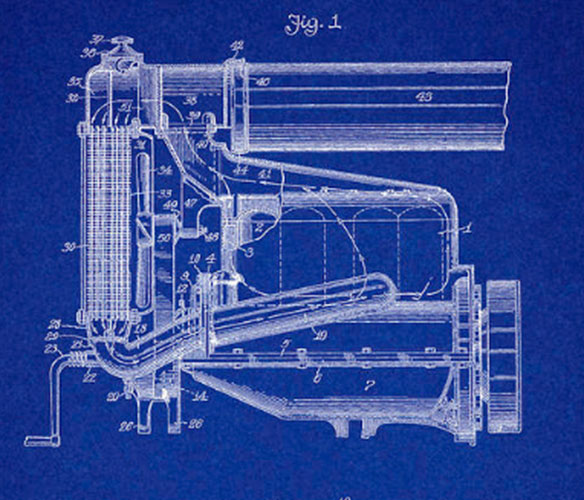
The T did not come from the factory with a water pump. OK, the first few hundred built did but it was soon found to be unnecessary and deleting it saved money. Instead, the T uses what is called the thermo-syphon system, which utilizes the scientific principle that hot fluid rises and will falls as it cools. In other words, the heat of the coolant picked up from the engine is what powers circulation. As the engine warms up, the coolant begins to rise. After rising through the engine, the coolant goes into the top of the radiator and the heat is dissipated by the air passing through the radiator as it falls. Having said that, some T owners want them, and a wide variety of after-market water pumps have been available since the earliest days of the Model T. Major T suppliers sell them to this day. Whether or not they help or hinder is a source of much debate within the T community. Regardless, it is fair to say that the pumps themselves are often a source of leaks, as the packing on the shaft is prone to failure.
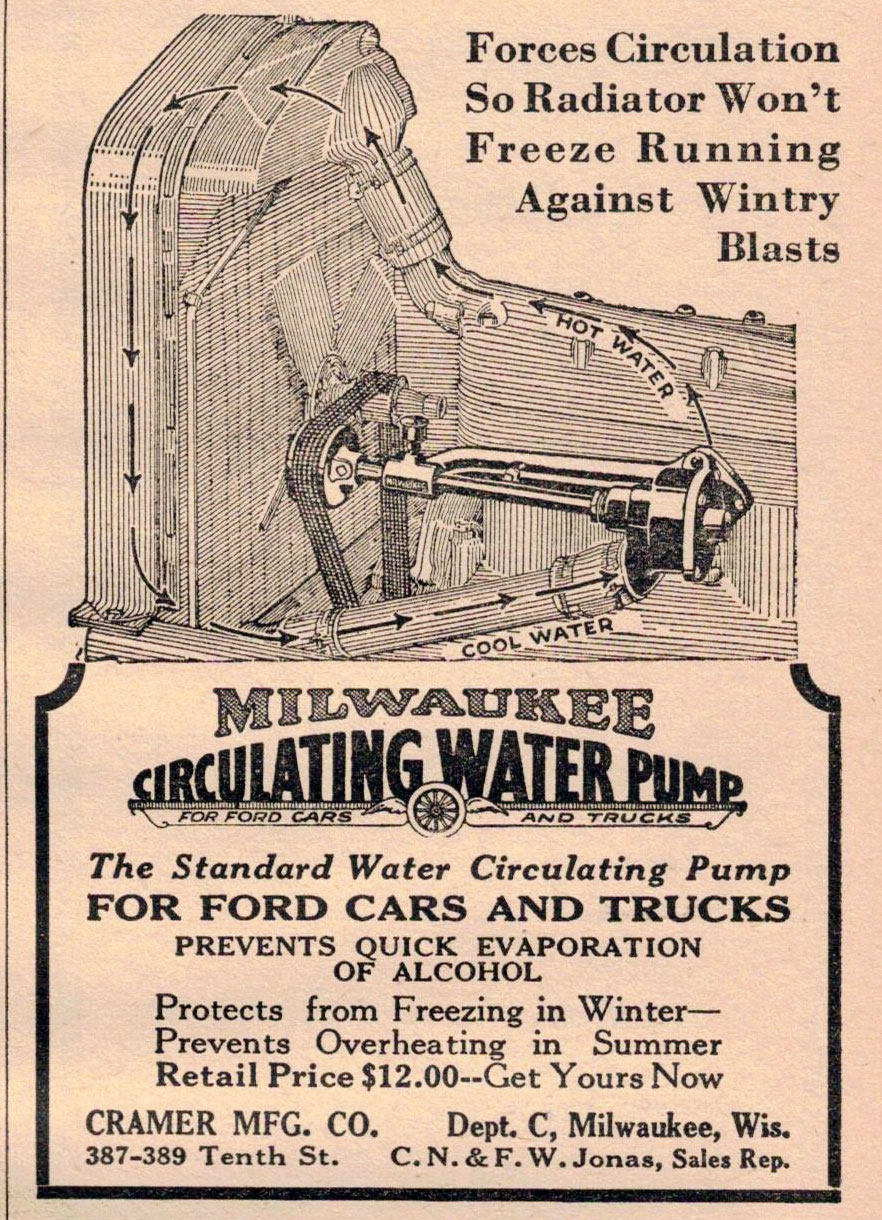
1920s advert for an after-market cooling system pump for a Ford Model T