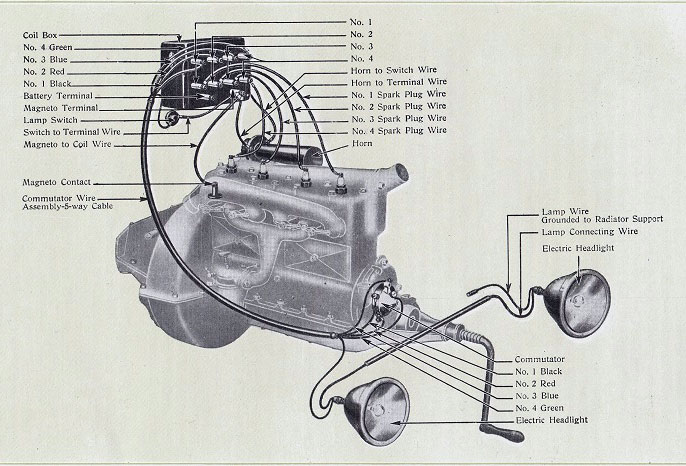
Ford Model T – Electrical System
All Ts came from the factory with 6 volt electrical systems. They all have negative ground. The system is as basic as it can be and is as reliable as was possible at the time but its fair say the Achilles heel of the Model T is the electrics. Other cars of the era all faced the same problems. . There is a well-used joke that says all carburetor issues are electrical. Owners have been tinkering with improvements and after-market products were plentiful since the Model T’s very earliest days.
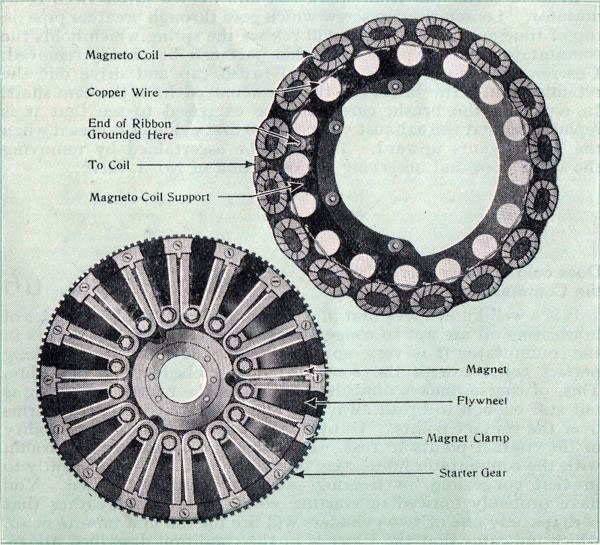
Ford Model T magento system components
No Battery and Acetylene Gas Lights
The first era of Ts – from1909 to 1915 – did not have batteries. They were started with a hand crank. Electric power for the spark plugs is generated by a magneto system which is comprised of a static ring of induction coils and a spinning set of sixteen magnets attached to the flywheel. As the engine turns electricity is created. The front lights were powered by acetylene gas, generated in a container attached to the running board, within which water is dripped onto a block of calcium carbide. The rear light and side marker lamps were powered by kerosene.

Ford Model T with acetylene lights
Magneto lights
In 1915, lights powered by the magneto became an option. These required a lot less maintenance but there was a drawback: inconsistency. Electricity output and hence the brightness of the lights varied with engine speed. Out in the country, with the engine at regular high RPM, they were OK, but in town, what with going slower, stop lights and signs, etc., the lights would be much dimmer. As a result, kerosene marker lights remained to enhance visibility.
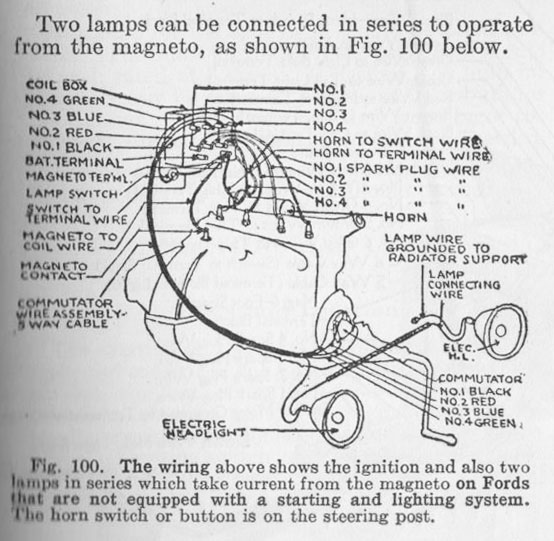
Ford Model T magneto lights wiring diagram
Batteries and generators
In 1919, the introduction of electric starters meant a battery would be needed. In most Ts it is located behind the front seats, either under the floor board or under the pick-up bed where an access hatch is needed. Having a battery requires a generator to recharge it after starting. After batteries were introduced, the head and rear lights were wired directly to it. The downside of a generator is that its output is affected by engine speed. While power for the spark plugs still came directly from the magneto, the battery powered lights would begin to fade, as they drew more from the battery than the generator was able to replace. This would also affect the amount of power available for the starter motor. This issue was never completely resolved during the production years of the T. It was also an issue that plagued all 6 volt cars with generators.
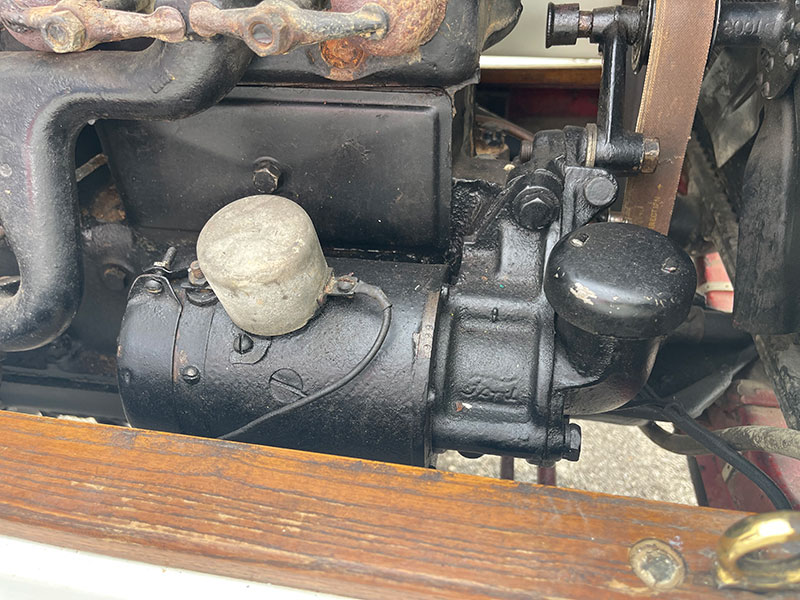
Ford Model T generator
Alternators and 12 volts
Alternators began replacing generators in cars in the 1960s – they are lighter, more powerful, more reliable, and output is less affected by engine speed as they include voltage regulators. It didn’t take long before T enthusiasts began installing them in Model Ts. Some small enthusiast owned companies took off the shelf products and modified them to fit in the T. At the same time, many Ts were changed to 12 volts.. Apart from changing the bulbs and the grounding cable, no other changes were needed. The increase in power from stronger batteries meant brighter lights and easier starts. It also allows people to add outlets for satellite navigation systems and phone charging. Very few add radios but it is technically possible. The major downside to using 12 volts is more wear and tear on starter motors. T owners who take part in a lot of long distance, multi-day, tours often bring replacement starter components and even entire motors just in case. In passing, 6V alternators are available and/or you can rewire the starter for 12 volts, but the stress on the business end, the Bendix, will remain.
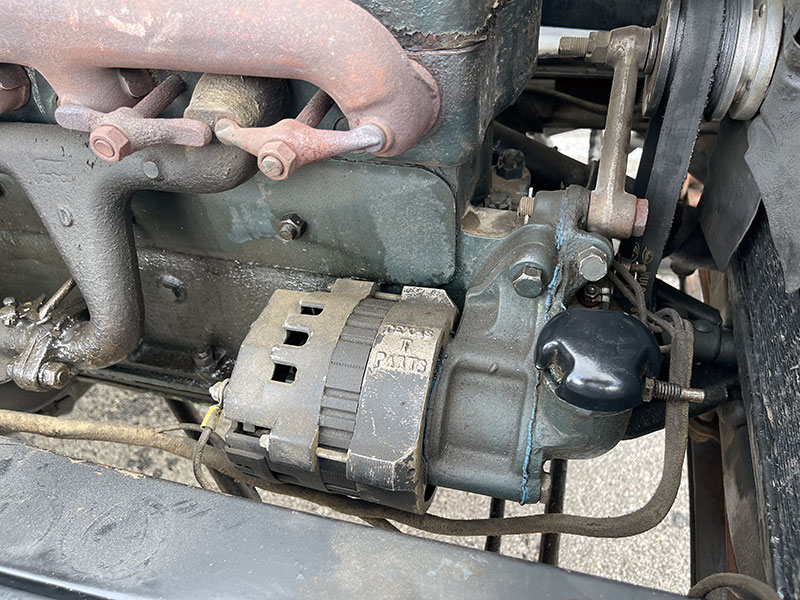
Ford Model T with alternator
Commutators and buzz box coils
All Ts came from the factory with a commutator. Its job is simply to complete the circuit sequentially on the trembler coils, one per cylinder. These coils, often referred to as buzz boxes, were located on the inside of the firewall until 1926 when they were moved to a box above the engine under the hood. The coils convert the low voltage power generated by the magneto into high voltage electricity for the spark plugs.
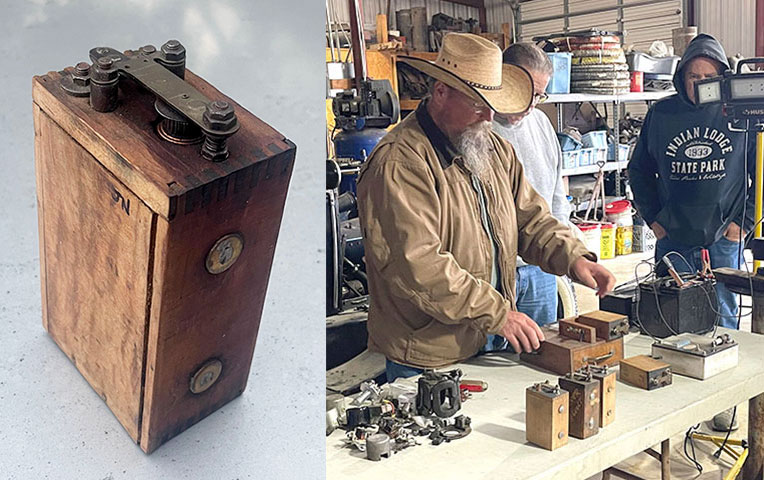
Ford Model T buzz box coils and how to test them
After-market Distributors
From the earliest days of the T, some owners have been dissatisfied with the factory commutator. A plethora of after-market products were manufactured during the T era. The original T commutator required maintenance. It was prone to collecting dirt and grime, plus anything with moving parts in an electrical system is literally wearing itself out every time it gets used. Consequently, after-market distributors were available during the T era. Basically stated, the distributor system by passes the four original buzz box coils and just has one modern style coil, usually attached to the firewall. The distributor sits on a housing that attaches to where the commutator was located, at the front of the engine. Its only job is to distribute power to the spark plugs sequentially. Various types are available from various suppliers to this day. It is fair to say that the commutator versus distributor issue is one of the most hotly debated Ford Model T topics to this day.
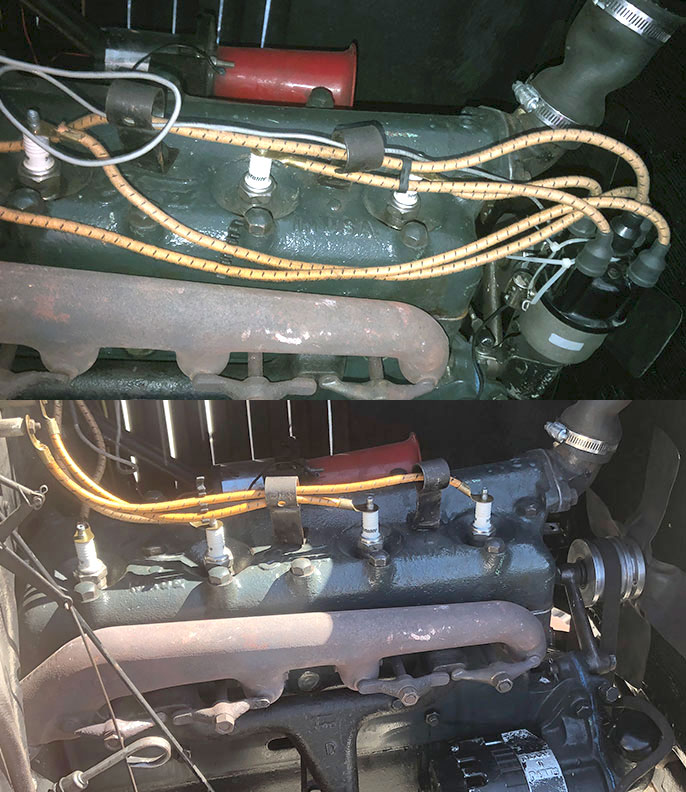
Same Ford Model T with a distributor and a commutator