Ford Model T – Engine, Carburetor, Fuel
All Model Ts have pretty much the same engine. It is a 4 cylinder, 4 stroke motor with a removable ‘L’ head. The combustion chambers are larger than the cylinders to accommodate the inlet and exhaust valves are at the top of the block beside the cylinders. The motor is low compression and makes between 20 – 22 horsepower. The engine’s output was downrated twice, first in 1912 with the introduction of a new cam, and again in 1917 with a lower compression head. The first changes were made for durability, the second when the octane rating in fuel was reduced at the start of World War One.

White metal babbitt poured onto a Ford Model T block
Babbitt not bearing
A major design element of the T engine is that is does not have roller bearings. Instead, friction is taken care of with a material called babbitt. This is a low-friction white metal alloy that coats the major rotating surfaces to stop steel from making contact with steel. Along with engine oil, babbitt works quite well in this slow-spinning, slow-compression environment. It is a “sacrificial” material. With all the heat and friction imposed upon it, it will wear out. It can also deteriorate if the engine isn’t run for a long time. Running the engine with low oil levels won’t do it any good either. You will need to find an individual or a shop to pour new babbitt. It gets heated up in a crucible and poured into molds. Or learn how to do it yourself.

Before and after of a Ford Model T engine
Engine rebuilds
Apart from babbitting, the T engine is fairly easy to maintain and repair. A good engine shop can magnaflux the block, make sure the deck is perfectly level and smooth, ensure the coolant passages are clear, and re-bore the cylinders if necessary. Several T vendors sell oversized aluminum pistons along with other components – crankshafts, valves, etc.

Ford Model T fuel delivery system
Carburetor
Different eras of Ts came with carbs made by different manufacturers. However, they are all pretty much interchangeable. They are all single venturi updraft types. As the T does not have a fuel pump and the engine operates at low RPMs with low compression, anything else would simply overwhelm the engine. On the whole, these simple carbs are quite reliable. (There is a saying within the Model T community that all carburetor issues are, in fact, electrical.) But like any mechanical device, especially one that deals with gasoline and the various contaminants that can lurk within, it will wear out eventually. There are very basic rebuild kits available but, unless you are an experienced expert yourself, you will probably find it best to ship it out to a dedicated rebuilder, often a committed amateur rebuilding carburetors of all types as a side job. They can sometimes send you one that is already rebuilt and yours will become a core to be rebuilt in due course.
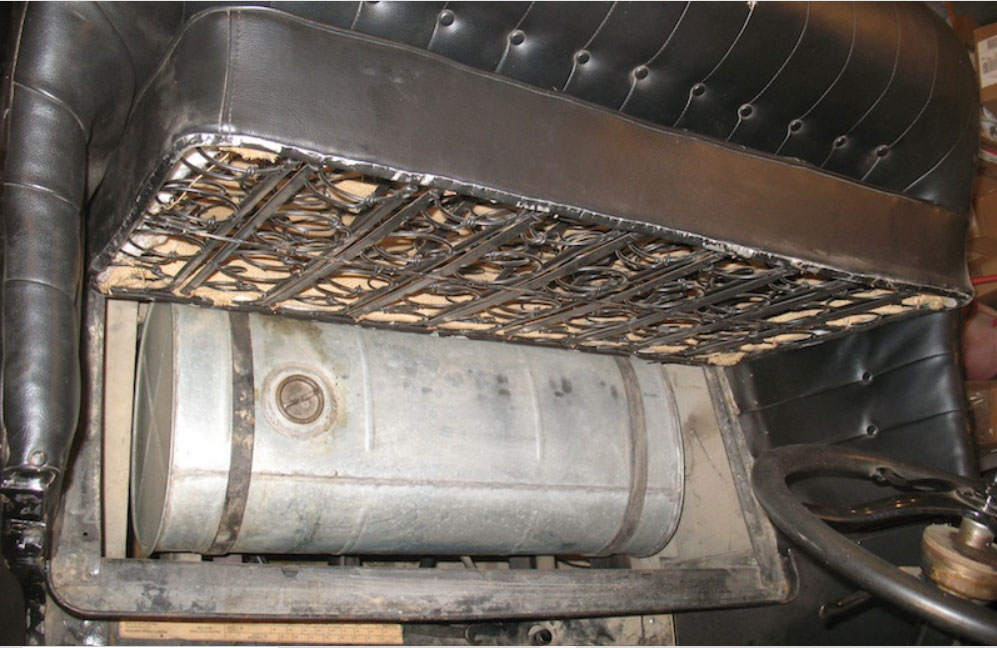
Ford Model T fuel tank, under the front seat until 1926
Fuel
If you drive your T frequently, anything you can get from a regular gas station is fine. You don’t need to overthink this. Just fill up and go, like a modern car. Ts pre-date the addition of lead into gasoline. (Lead became a common additive in the 1930s as engine compression generally increased. Ts have very low compression engines.) Ts do not do any better with high octane levels. For people who don’t drive their Ts very much, avoiding ethanol blends may have value as the ethanol absorbs moisture from the air over time. People who put their cars away for the winter should either empty the gas tank or fill it to the very top (to minimize the amount of air in the tank) plus use a long term fuel stabilizer. The best known brand in the USA is STAY-BIL, but there are others.
The fuel tank is located under the front seat for all years until 1926 when it was moved to the cowl.