Ford Model T – Transmission
The transmission system on the Model T is very different from modern cars with either standard stick-shift or automatic gear boxes. The Model T has two forward gears plus reverse. These are engaged with pedals moving bands on a drum inside a bell housing, often called the hogshead, behind the engine. The bands are arc shaped piece of metal with linings that make contact with a spinning drum that connects with the drive shaft. The band linings were originally made of cotton. Wooden linings came later. Nowadays, kevlar is a modern option and very popular.
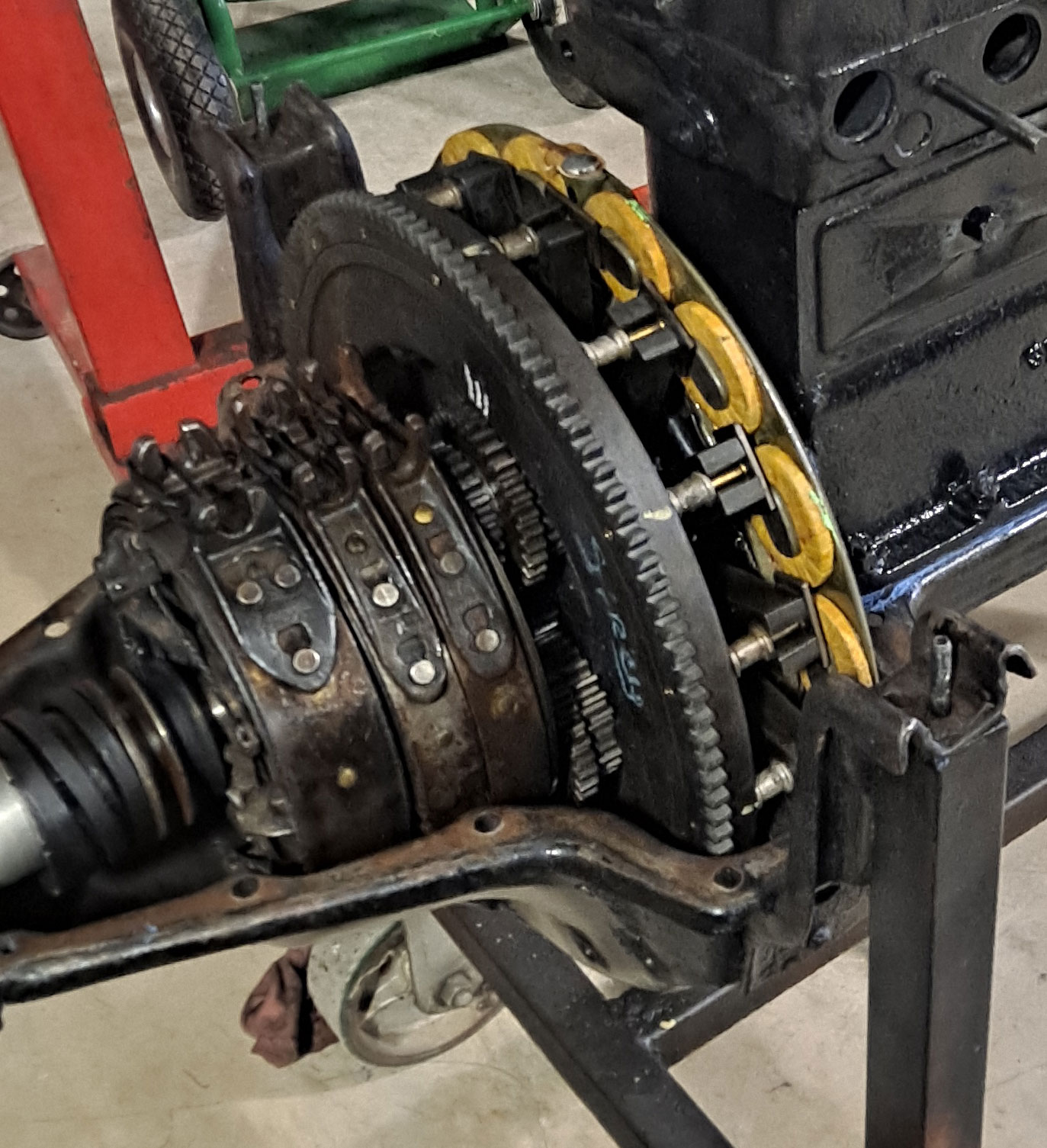
Ford Model T transmission
Neutral
Ts do not have a clutch mechanism as such. They have a neutral position in between the low and regular gear ratios. The T is in neutral when the handbrake is fully pulled back or when the lever is suspended in the middle of its travel from fully engaged – pulled all the way back – to fully disengaged, all the way to the front. There is a cam on the lever connected to the transmission that allows the lever to interact with the forward speeds band.
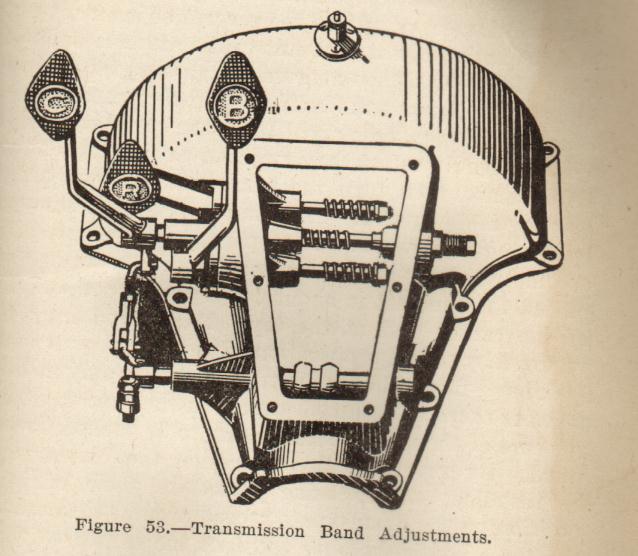
Ford Model T transmission band adjustments
Forward gears
To engage low gear, the pedal on the left in front of the driver is pressed all the way to the floor. This engages a reduction gear that increases torque for moving off from being stationary or, when needed, to help getting up steep hills. Regular drive – often called high gear – is achieved by letting the left pedal travel completely upwards. This disengages the transmission drum from the drive shaft and the engine is directly connected on a 1:1 ratio. The wide power band of the engine and throttle inputs, controlled by the driver, are suitable for most driving conditions. The driver‘s left foot is not required to work during regular driving. For steep hills or slowing down, low gear can be easily re-engaged by pressing the forward gear pedal down.
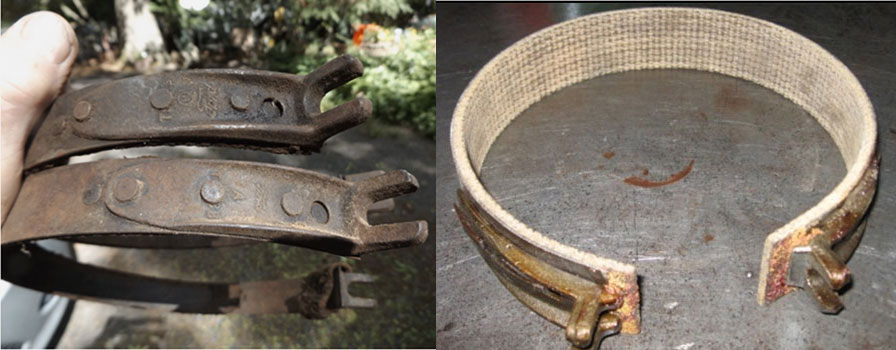
Ford Model T transmission bands
Reverse
To engage reverse, the engine must first be in neutral. You do this by suspending the forward gear pedal in the middle, either with your foot or the parking brake lever, as mentioned before. Then the driver presses down on the middle pedal for as long as reverse motion is required. It’s a matter of driver preference as to which foot is used to engage reverse. If neutral is being achieved by holding the left pedal in the middle position, the right foot is the only choice. Moving the right foot to the brake pedal on the far right is relatively easy and will disengage reverse when the pedal is released. If the parking lever is holding reverse, the left foot can be used for reverse, with the right foot on standby for the brake.