A Brief Introduction to the Ford Model T
The Ford Model T was introduced in 1908 and lasted until 1927. It was considered a major leap forward in cars designed for the lower end of the market. It was simple, solid, reliable and affordable. The mechanical underpinnings remained essentially the same throughout the production run. A wheel base of 100 inches. A low compression 4 cylinder 22 HP engine mated to a 2 speed transmission, plus reverse. No fuel, oil or water pumps. Minor changes to the mechanicals were made over the years. One of the biggest changes was the introduction of electric starters in 1919. Body styles evolved a lot but the frame, engine, transmission, braking and controls remained essentially the same. No power or speed upgrades. No creature comforts such as heat or AC. No steering or brake-assist. No emission controls. No automated processes – human input is required for everything. It’s fair to say that the main philosophy that determined the evolution of the Model T was to build it faster and cheaper.
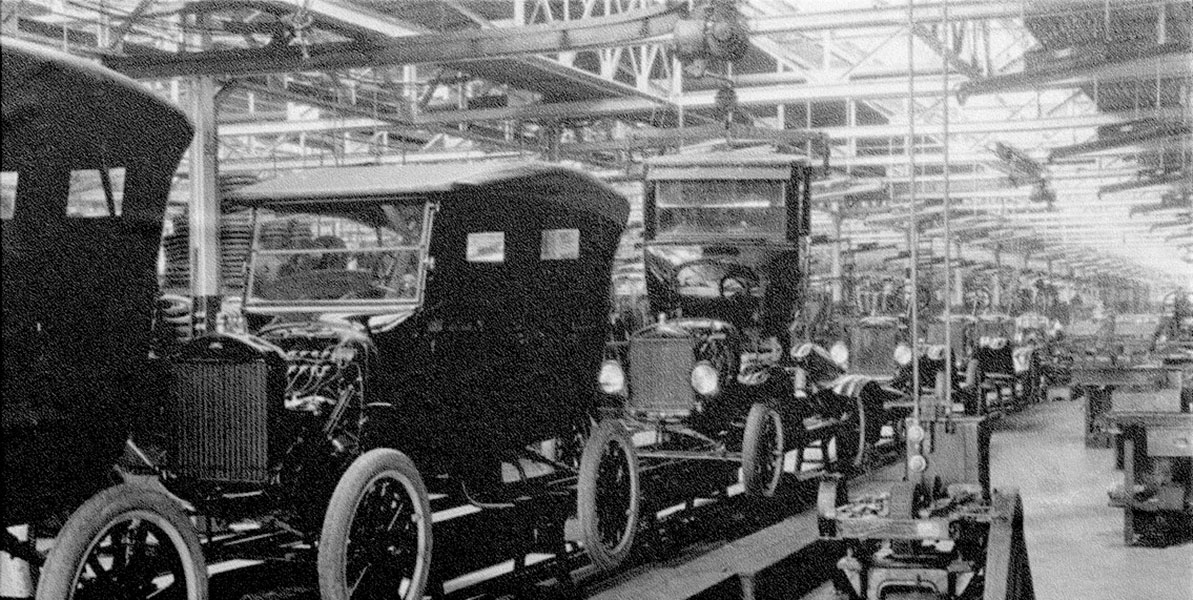
In all, over 15 million Model Ts were made during its 19 year run. The most popular body style was the open touring car that could seat 5 people. Over 6 million were made. It lasted from the beginning to the end of production. To be clear, the 1909 and 1927 Touring Cars looked very different but they were similar under the skin. The Ford Model T’s popularity peaked in 1923 when sales exceeded 2 million! At this time 47% of all vehicles on American roads were Model Ts. The least expensive T in the USA cost $365 – the equivalent of around $6,800 today. And the price actually went down in 1924, to $295.
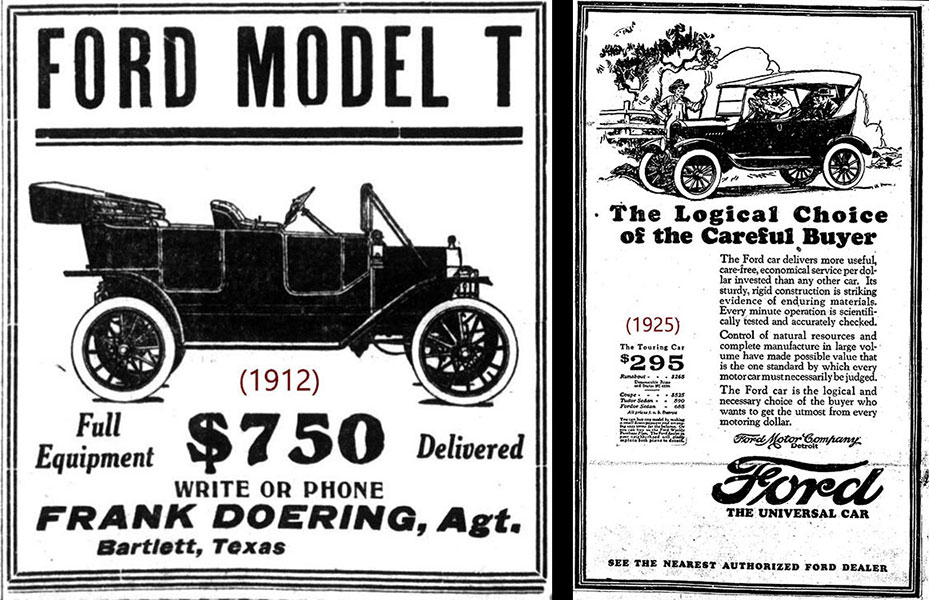
There were nine official factory body styles, and an even larger variety of after-market variations. Early cars had a lot of brass. The amount steadily decreased until the all black style was introduced in 1917. There was an evolutionary change to the body styles in 1924, but the biggest change came with the “Improved Ford” in 1926. The body, chassis and wheels were changed significantly. The fuel tank was relocated from under the front seat to the cowl, but the fundamentals remained more or less the same.
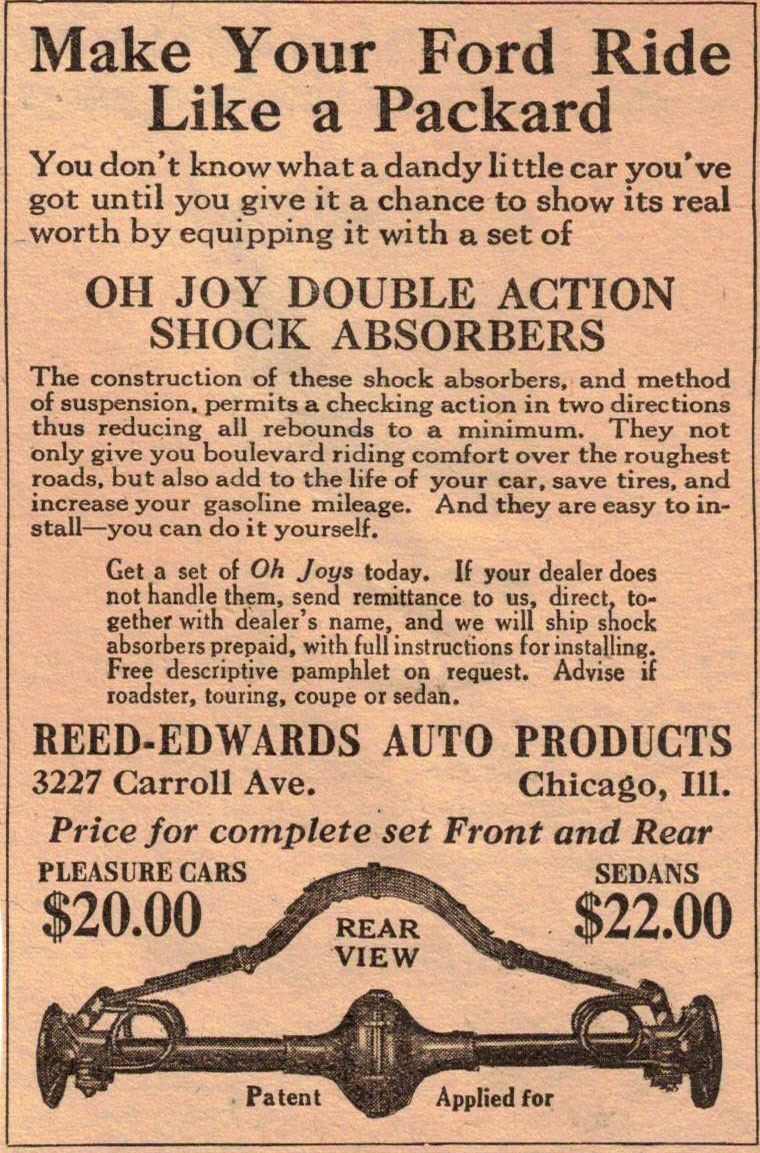
With the car’s immense popularity, there were a staggering number of after-market add-ons available. These products were efforts to smooth out the rough edges, provide creature comforts, add personal touches and even improve performance. The most popular were improvements to ride and handling. The T was designed for unpaved roads. It had a flexible frame, hard springs but no shock absorbers. As roads improved and speed increased, folks wanted their T to move along as smoothly as possible.
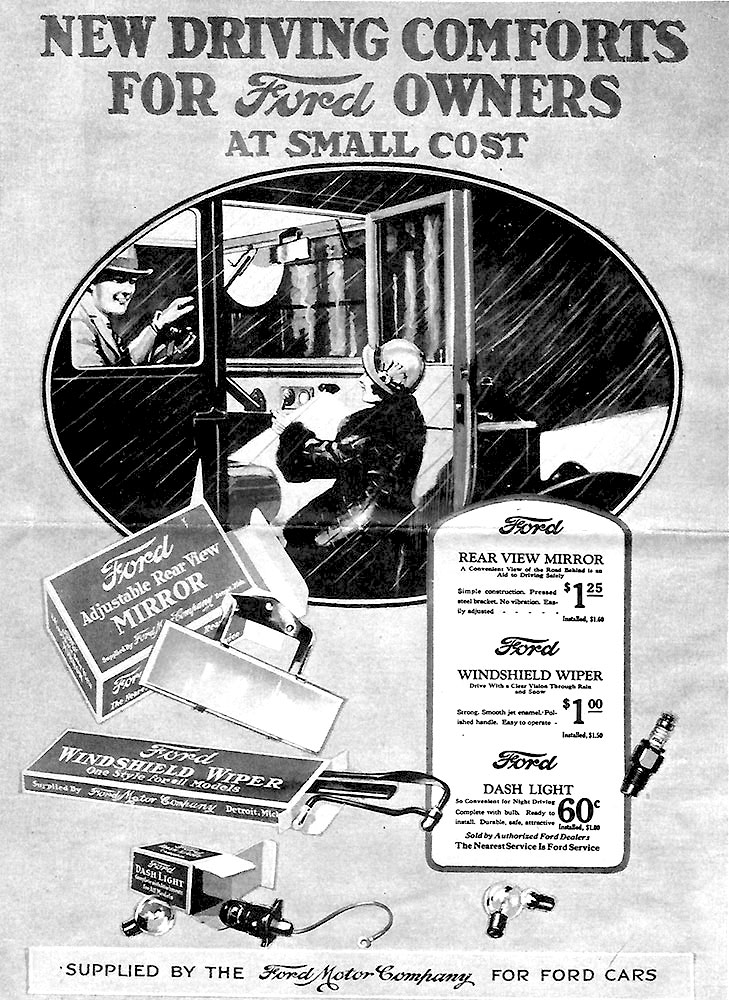
It is said that dealers made more money from selling extras than from the car itself. The Sears catalog had many pages dedicated to items for Model Ts. You could get rear view mirrors and hand-operated windshield wipers, clocks, heaters, speedometers and odometers. You could get replacement side curtains for your open car. Cans for fuel, oil and water, with different colors, designed to be attached to the running boards. Accordion-style running board “fences” to allow you to carry luggage or picnic baskets. After-market devices to improve performance on hills, and after-market add-on brake systems, also handy when negotiating hills. Owners liked to personalize their vehicles. People added pin-striping or changed the color completely. You could buy replacement bodies. You could get fully enclosed bodies. Or turn it into a race car. You could replace the folding top with a hard one. The list goes on.